Students who started getting help from the nonprofit One Million Degrees while in high school were more likely to earn an associate degree and, on average, earned $14,000 more than their counterparts, University of Chicago researchers found.
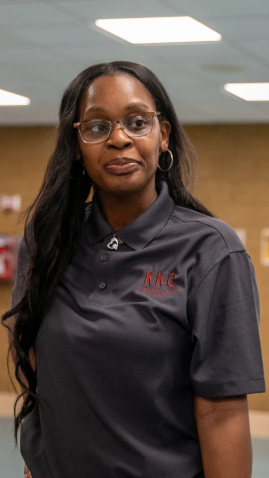
Pictured is Tiara Davis at Kennedy-King College.
When Tiara Davis went back to school in her 30s after having three kids, she wasn’t looking to get involved on campus. She just wanted to “keep my head down and get my degree.”
But as she progressed at Kennedy-King College in Englewood, one of the City Colleges of Chicago, she met a coordinator with One Million Degrees who encouraged her to apply to the nonprofit’s program. She now credits the support and resources it provided with putting her on track to earn an associate degree in computer science in May.
Davis had dropped out of college before, and she says without the program, she was bound to do it again. Instead, she is gearing up to pursue a four-year degree.
“I would have 1,000% stopped,” Davis said. “I was coming for an advanced certificate. I’m leaving with an associate degree, and I’m transferring for my bachelor’s. That was not in the plan at all, but it was due to resources like this that made me see that, ‘Hey, there might be something further.’”
Community college students like Davis who participate in the Chicago-based One Million Degrees program are more likely to earn their degree and see higher wages after they graduate, a study released Wednesday by the University of Chicago Inclusive Economy Lab found. The effects are even greater if students start getting support early, as they transition from high school to community college.
Researchers say the findings bolster the case that wraparound supports can improve students’ outcomes in the workforce whether they are embedded within a college or offered by an outside organization.
Funded largely by donations and grants, One Million Degrees partners with City Colleges and often works with first-generation and low-income community college students. Students can apply while they’re in high school or if they’re enrolled in community college.
Support works: Community college students who participate in the Chicago-based One Million Degrees program are more likely to earn their degree and see higher wages after they graduate, a study released Wednesday by the University of Chicago Inclusive Economy Lab found. It bolsters the case for wraparound supports, whether embedded within a college or offered by an outside organization.