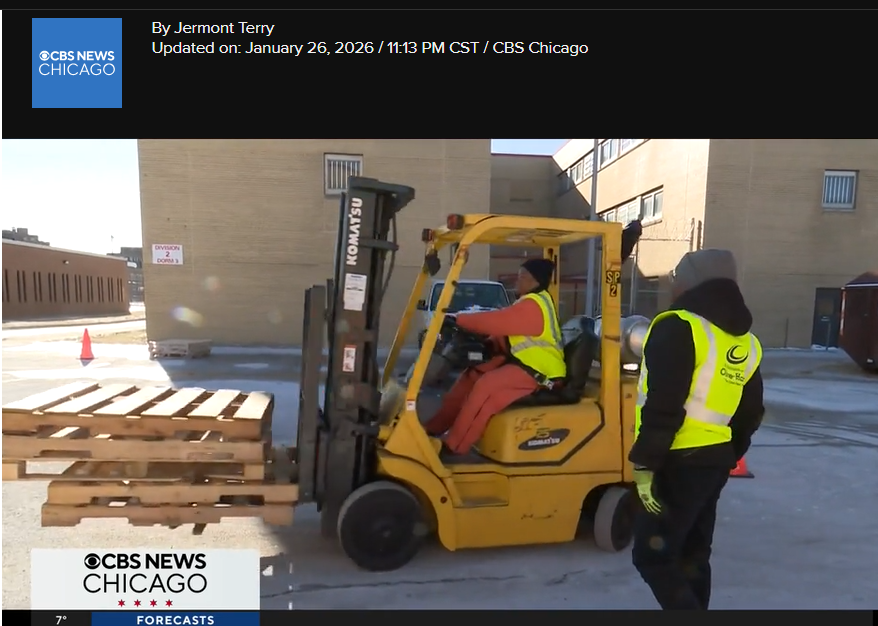
Inmates operating heavy machinery may sound counterintuitive, but at the Cook County Jail, it’s a major opportunity for women behind bars. They are getting the chance to learn a trade to help them find a job when they get out. At the Cook County Jail, on the other side of the barbed wire, you’ll find something unexpected is going on.
In the freezing temps, chains dangle from a guard watching 10 incarcerated women, all layered under their heavy-duty orange jumpsuits.
“If you can deal with this weather, you can deal with anything,” said inmate Davanise Atwood.
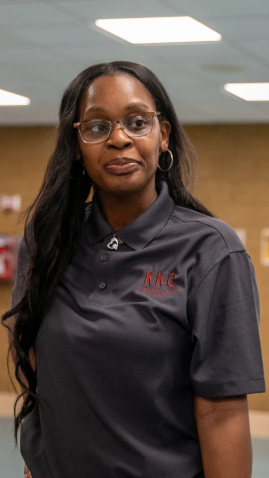
She is in custody for possession of a weapon and burglary, but as her cases play out, she refuses to sit idle. Instead, the 35-year-old is shifting gears by turning her troubled past into a new trade.
“It just gave me an opportunity to take advantage to be able to do something positive and productive when I get out of this facility,” she said.
This is the first all-women class getting certified in forklifting at the Cook County jail.
“It’s a bad thing we came here, but it’s good we got to learn this,” Atwood said.
WATCH THE NEWS STORY ON CBS 2 CHICAGO
And well before the ladies ever hop in the seat, they spend a week sitting in a classroom taking tests and learning how this machine works.
“I’d say the testing was pretty easy because have a great instructor,” Atwood said.
“Ensuring we do our part in reducing recidivism,” said Kimberly Hollingsworth, president of Olive Harvey College.
The college teamed up with the Cook County Department of Corrections. It’s offering those like Atwood an opportunity to earn industry-recognized credentials in forklifting.
“I could see in their eyes they were really committed to this, you know, they talked about how cold it was, but at the end of the day, being able to walk away with a certificate and being able to contribute meaningfully to their community when they get out of here, it what was important,” Hollingsworth said.
The program at the jail runs for two weeks, but the women get a certification that will last at least three years. For many, that’s well after they are released. 
“It changed my mindset, it uplifted me to not just think about what’s going on in the inside and getting me ready for what’s going on in the outside world,” Atwood said.
Cook County Sheriff Tom Dart said the forklift program stands out for many reasons.
“Most of the programs we have for the women have a huge child component,” he said.
But this focuses on job placement. Women make up 6% of the jail’s population, and often, when programs are pitched, they are for men.
“I wasn’t thinking, you know, forklift driving, oh lets get the women involved. Uh uh, I missed it. And it was one of those things where somebody else, thank God, was like sheriff, if the women would be great in this too. I was like I wish I thought of it,” he said.
Dart understands some critics will say bringing machines into the jail is doing too much for inmates.
“Give me the data that shows the old process of just lock everyone up. Everyone is just going back and forth to court and you just keep them locked up, and that worked? I have no data, none, zero,” he said.
If you’re wondering just how many tax dollars are going toward training these women.
“I’m not going to the taxpayers,” Dart said.
Instead, the money inmates pay to buy snacks and other items in the commissary covers the cost, something called the inmate welfare account.
“Whatever the price is, a percentage of that price goes back to us for funding programs for detainees, and so that fund starts growing, and that fund is the one we use to fund all these things,” Dart said.
Atwood is grateful for her certification and is now envisioning brighter and better days.
“It gives you a different view of just doing things better with your life. Just because you make one mistake, it doesn’t mean your life is over with it,” Atwood said.